
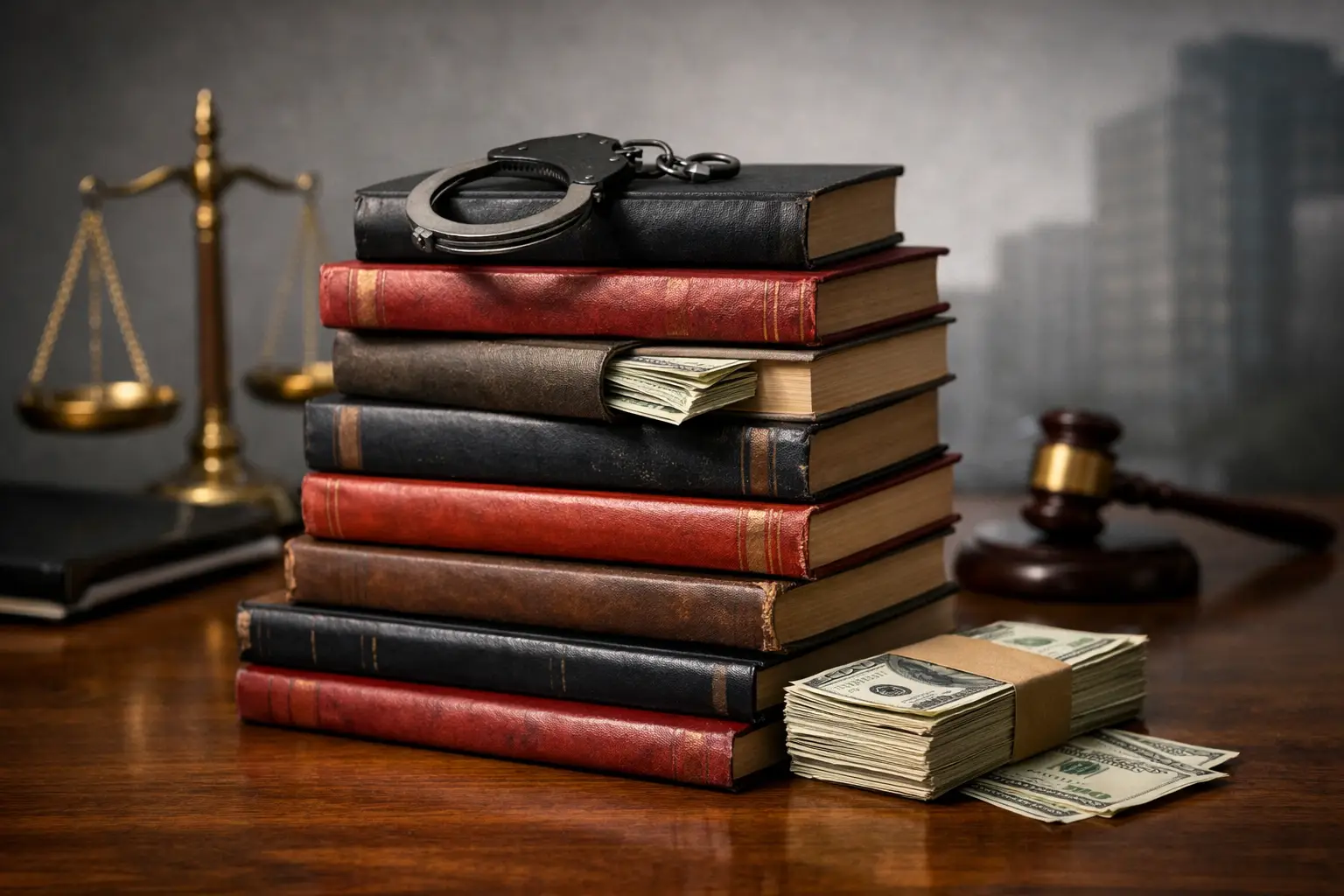
Some novels hand you a mystery. The best books about corruption hand you something far more unsettling – a system that already knows how to protect itself.
That is what makes corruption fiction so difficult to forget. It is not just about bribery, blackmail, or backroom deals. It is about power under pressure. It is about what people justify when careers, institutions, reputations, and lives are on the line. For readers who want suspense with real moral weight, these stories hit harder because the threat is not random. It is organized. Protected. Often legal on the surface, rotten underneath.
Why books about corruption hit so hard
Corruption is one of the most durable engines in thriller fiction because it operates at two levels at once. First, it creates immediate tension. Someone knows too much. Someone is being bought off. Someone is being silenced. Second, it opens the deeper question that gives a story staying power – what happens when the people trusted to protect justice are the ones distorting it?
That question turns a good thriller into something more dangerous. It forces every character into compromise, loyalty tests, and impossible decisions. The stakes become personal and institutional at the same time. A witness can disappear, but so can the truth. A hero can win the fight and still lose faith in the system they served.
Not every novel about corruption works in the same way, though. Some focus on government conspiracy. Others dig into police departments, law firms, intelligence networks, financial crime, or media manipulation. The strongest ones understand that corruption rarely looks like cartoon villainy. It looks professional. Calm. Reasonable. It has procedures. It has talking points. That is why it feels real.
10 books about corruption that deliver suspense and consequence
All the President’s Men by Carl Bernstein and Bob Woodward
This is nonfiction, but it reads with the pressure and momentum of a political thriller. Few books capture institutional corruption with this level of clarity. What begins as a break-in becomes a far larger portrait of abuse, concealment, and power protecting power.
The force of the book comes from process. Phone calls, dead ends, fragments, fear. It shows how truth becomes dangerous long before it becomes public. If you are drawn to stories where the system closes ranks and every fact has to be fought for, this remains essential reading.
Absolute Power by David Baldacci
Baldacci understands the raw appeal of political corruption fiction – the moment an ordinary man witnesses something he was never supposed to see. From there, the novel accelerates into a collision between personal survival and state power.
What makes it effective is its simplicity. The setup is clean, the stakes are immediate, and the threat feels enormous. This is a strong choice if you want corruption fiction with velocity, danger, and a relentless sense that the truth alone is not enough to keep anyone safe.
The Pelican Brief by John Grisham
Grisham has built a career on exposing the fault lines between law, money, and influence, and this novel remains one of his sharpest. A law student writes a theory about political assassination, and suddenly she becomes a target.
The hook is classic thriller machinery, but the deeper power lies in how the novel treats institutions. Courts, federal power, legal access, and corporate reach all become part of the same pressure system. It is a reminder that corruption does not need chaos to thrive. Sometimes it thrives through status, polish, and official channels.
The Constant Gardener by John le Carre
This is corruption fiction with grief at its center. Le Carre takes the thriller frame and gives it emotional depth, following a man uncovering the truth behind his wife’s death and the machinery surrounding it.
The novel deals with pharmaceutical power, diplomatic insulation, and moral indifference on a global scale. It is quieter than some thrillers, but no less devastating. If you prefer books where the suspense builds through revelation rather than explosions, this one stays with you.
The Firm by John Grisham
At first glance, this is a story about ambition. Then the walls start closing in. That shift is what gives the novel its force. The corruption here is not only criminal. It is aspirational. It recruits through prestige, salary, and belonging.
That is the dark brilliance of the premise. The hero is not dragged into danger by accident. He chooses a life that looks perfect and then discovers the price attached to it. For readers who like corruption stories built around seduction before betrayal, this is one of the strongest examples.
Power of the Dog by Don Winslow
This novel is brutal, sprawling, and deeply attuned to the corruption that grows between governments, cartels, intelligence interests, and law enforcement. Winslow does not offer easy innocence. Nearly everyone is compromised by the time the machinery gets moving.
It is not a clean political thriller in the traditional sense. It is darker, wider, and more violent. But if your interest in corruption fiction includes the way institutions become entangled with criminal power, this is an exceptional read. It demands attention and gives very little comfort back.
Advise and Consent by Allen Drury
For readers who like political pressure in its purest form, this is a classic. The novel is built around a Senate confirmation battle, but beneath that official drama lies blackmail, ambition, ideological warfare, and the quiet cruelty of political survival.
There are no cheap thrills here. The tension comes from character, procedure, and hidden leverage. That makes it especially rewarding for readers who understand that corruption is not always a suitcase full of cash. Sometimes it is information used at the precise moment a person is weakest.
The Ghost Writer by Robert Harris
Harris is especially skilled at writing power with a polished surface and a poisoned core. In this novel, a ghostwriter hired to complete a former prime minister’s memoir begins to uncover dangerous truths.
What works so well is the atmosphere. Coastal isolation, carefully managed narratives, elite damage control. The book understands that corruption often survives through storytelling – through the official version, the denied version, the version built to outlast scandal. This is a sharp pick for readers who like political suspense with intelligence and restraint.
LA Confidential by James Ellroy
Police corruption has its own rhythm, and Ellroy writes it with violence, scale, and moral fury. This is not a tidy story about one bad cop. It is a story about a whole civic ecosystem shaped by image, greed, brutality, and complicity.
The novel is dense and aggressive, which may not suit every reader. But if you want a book that treats corruption as culture rather than incident, it is hard to beat. Every alliance feels temporary. Every truth comes stained.
A Question of Justice by Stephen Olney
Some corruption stories ask who committed the crime. The more unsettling question is who benefits when the truth is buried. That is where this novel operates – in the dangerous space where power, loyalty, and justice collide.
For readers who want a political thriller driven by consequence, not just spectacle, this kind of story delivers what the best books in the genre promise. Pressure from above. Risk at every level. And the central fact that justice always demands a price.
What to look for in the best books about corruption
The strongest novels in this space do more than expose wrongdoing. They understand structure. They show how corruption protects itself through reputation, bureaucracy, and fear. A weak story gives you villains. A strong one gives you incentives, silence, and people who know exactly why speaking up could destroy them.
It also helps when the protagonist is not morally spotless. Corruption fiction becomes far more compelling when the central character has something to lose beyond their life. A career. A family. A past mistake. A compromised loyalty. Suspense grows sharper when the fight for truth is also a fight against self-interest.
Pacing matters too, but not in a simplistic way. Some readers want speed, pursuit, and immediate danger. Others want slow pressure, where each discovery tightens the vice. Neither approach is better. It depends on what kind of tension you want. The common thread is consequence. Every revelation should cost someone something.
Why this theme keeps returning
We return to corruption fiction because the conflict never really goes out of date. Power still shields itself. Institutions still fail under pressure. People still talk about justice as though it is fixed and obvious, when in reality it is contested, expensive, and often dangerous to pursue.
That is why these books land with such force. They give readers suspense, yes, but they also stage a moral test. What does truth matter when the machinery against it is bigger than any one person? What does loyalty mean when loyalty becomes complicity? When does survival become surrender?
Those are not abstract questions. They are the pulse of the genre.
If you are choosing your next read, choose the novel that understands one hard fact: corruption is never only about the crime. It is about the system that teaches people to live with it, excuse it, and profit from it until someone decides the cost of silence is too high.